
Bird Wise Observations: Blueberry Farmer Audrey Matheson
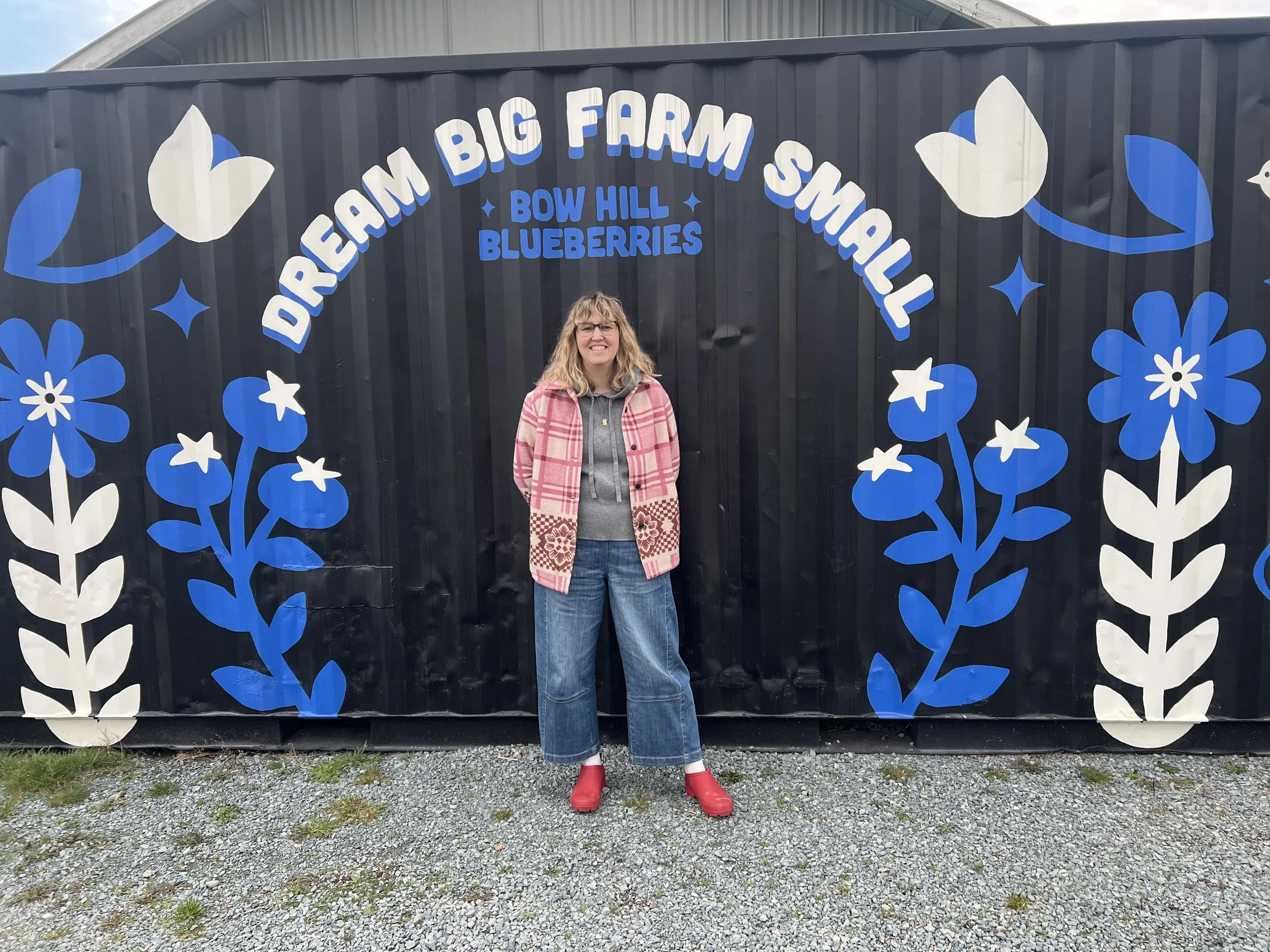
Audrey Matheson of Bow Hill Blueberries (Photo: Bryony Angell)
April signals spring, and the white birds of winter that are the focus of our Be Bird Wise campaign are mostly departed north. But other birds arrive across the working landscape of Skagit, drawn by the abundance of agriculture and the proximity to mountains and sea that is a distinct feature of this region. These same features are what make growing blueberries possible in the rich soil of the Skagit watershed. Audrey Matheson, co-owner of Bow Hill Blueberries, in Bow, Washington, shares her experience of birds on her farm, from the helpful raptors keeping the starlings in check to the stealth goldfinches building cryptic nests in the blueberry bushes. The birds of spring and summer seasons have their own impacts on the people and land of Skagit.
In 2020 my brother Ezra Ranz and I, and our spouses, saw a listing for the farm and knew it was for us. My brother and I have had a dream of one day running a farm and contributing to sustainable agriculture. The timing of the listing was perfect: all four of us were in a place to try something new. That year, we four became the new owners of Bow Hill Blueberries.
My brother and I grew up in rural Northern California in the Sierra Valley, surrounded by a lot of nature and cattle ranches. Our family had a kitchen garden and chickens. The Bow and Edison areas have a similar vibe to Sierraville, where we grew up, one that we wanted to share with our own families.
Bow Hill Blueberries was an established farm when we bought it. The plants on the farm were planted in 1947 and are still growing strong! We grow four varieties of heirloom blueberries: Jersey, Stanley, Blue Crop and Rubel.
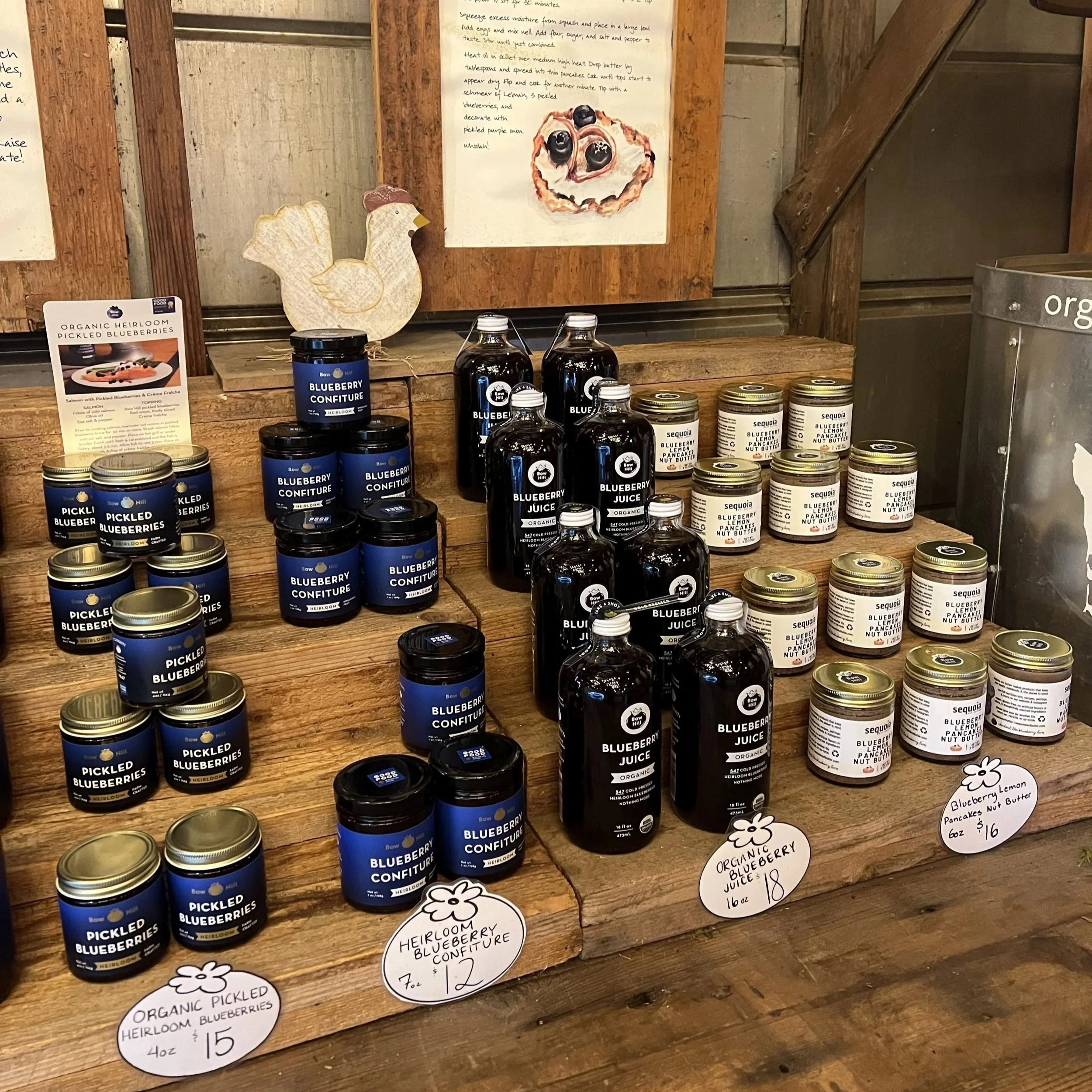
Display at Bow Hill Blueberry Farm Store (Photo: Bryony Angell)
During our first year of growing blueberries, we had a pretty steep learning curve, each of the four of us pulling on our previous careers, education, and experience to learn how to care for the farm and grow the business. And then a fire destroyed our processing facility. Before the fire, we produced everything onsite: fresh and frozen berries, dried and pickled berries, juice, powder, marinade, and confiture (similar to jam). After the fire, it took time to find places to process what we used to do onsite. We brought back our array of products slowly but surely over five years. We hand-pick our blue crop and freeze down berries not sold as fresh on site. We also freeze down machine-picked berries on site. The powder, juice, and dried blueberries we make at Sauk Farm in Concrete. The confiture and marinade we make in Gold Bar.
The last product we were able to bring back are the pickled blueberries. We rented space at the Cloud Mountain facility in Whatcom County to make the pickle this past fall.
Here on the farm, we have a year-round farm store and sell fresh berries in addition to our signature products. We’re open seven days a week during the harvest season in July and August. We also sell at farmers’ markets year-round. I live part of the time in Seattle, to make the most of the established farmers’ markets in that urban area.
Wild birds are part of farm life, whether as cohabitating neighbors or crop-eating nuisance. For us, the birds are mostly neighbors. On the farm, we’re dealing with bird abatement only part of the year. We have one or two “wavy Daves” –those inflatable car lot attention grabbers—those mostly do the trick, in addition to the birds of prey in the nearby conifers around the property. Thanks to the extra help from raptors hunting some of those smaller birds, we don’t have to net our blueberries.
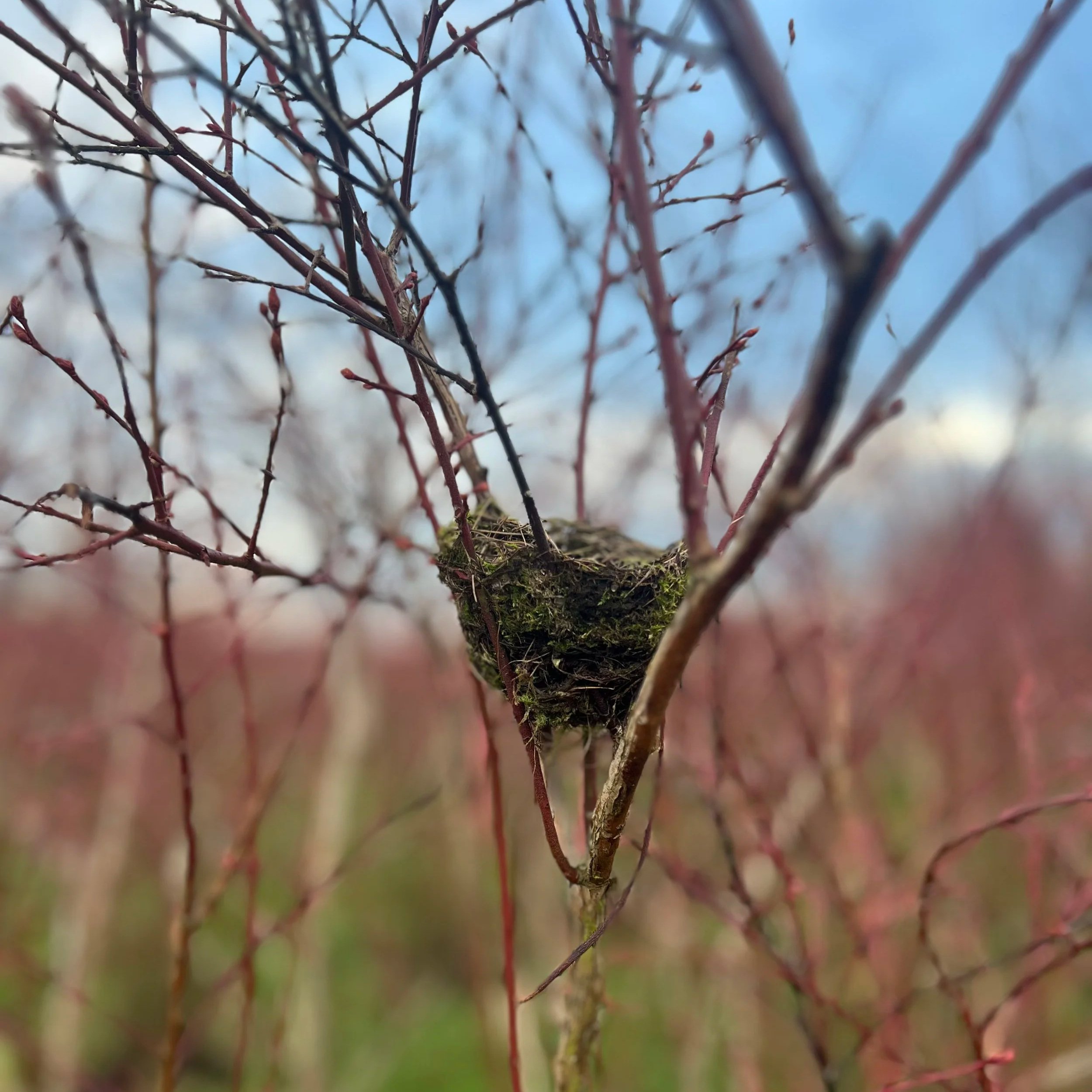
Songbird nest perched amid branches of a blueberry bush (Photo: Bryony Angell)
Through the seasons, we observe a lot of different birds around our farm, both big and small birds, birds that are in Skagit in the winter like the swans and snow geese, and the ones that actively use the space on our farm during other times of the year. We mostly coexist with them during the year as farmers. It’s just a few species that are sometimes an issue, the ones that flock in large numbers and eat fruit, like European starlings and Brewer’s blackbirds. Those are the birds that need to be scared off during harvest
In the winter, when our team prunes, they expose the cute little nests that have been there since the previous spring. During spring, before the berries are ripe, I also have come across little blue Robin’s eggs in nests in the bushes.
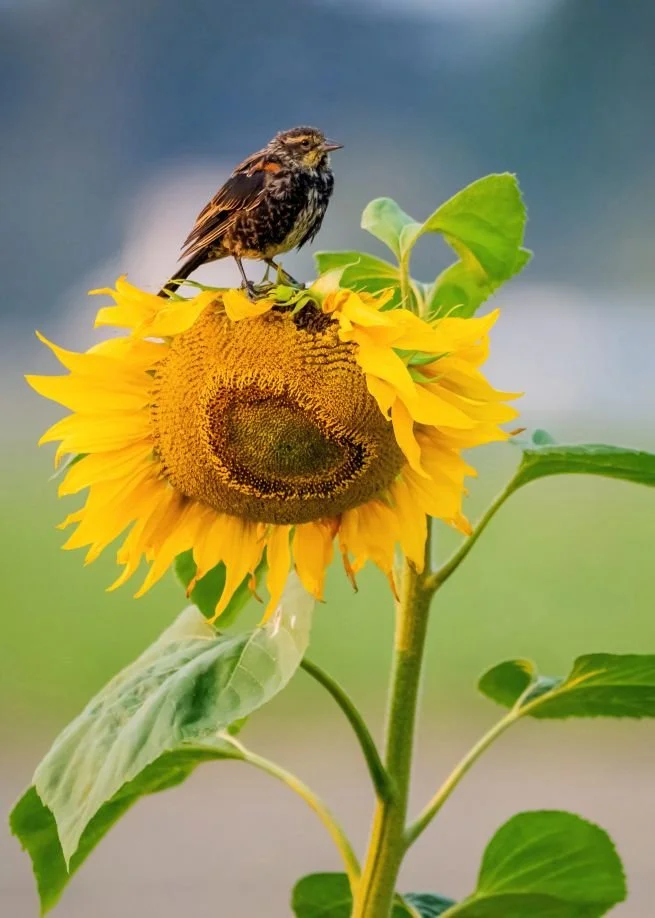
Juvenile Red-winged blackbird on sunflower (Photo: Cedarbrook Studio)
I see a lot of purple finches, American goldfinches, chickadees and various sparrows flitting in and out of the bushes in the spring, so I suspect they nest in there, too. I’ve noticed that the goldfinches especially are fond of the Jersey blueberry bushes. We call it “the Jersey Jungle,” because those bushes are fuller and taller than the other varieties. I hear the goldfinches in there, flitting around in the cover. Nesting season doesn’t conflict with when the berries ripen. By August when the berries are ready, if any birds have nested in the blueberry bushes, the young have fledged.
There’s a lot of forage for the birds on the farm property beyond what we grow as crops. For instance, the former owners planted sunflowers, which the birds eat. The birds have spread the seed around, and we have volunteer sunflowers across the farm. It’s a surprise every year where the flowers pop up! We've also planted the beginnings of a native hedgerow that will provide habitat for birds and forage for native pollinators throughout the year.
We also maintain a more natural habitat on our property that the birds use. Along the Edison Slough side of our farm, we’ve intentionally planted more native trees and shrubs through a program with the Skagit Conservation District (SCD). We were introduced to SCD by Harley Soltes, the previous owner of Bow Hill Blueberries, who had worked with them on other projects. SCD provides free technical assistance to land managers, funding for qualified projects, and natural resource educational programming throughout our community.
The area of our property containing the slough had reed canary grass, bittersweet nightshade, and other invasive weeds choking the waterway and competing for sunlight and space with the adjacent blueberry crop. The area was difficult to manage or mow because of water saturation much of the year. The canary grass creeps into the crop and is hard to get rid of. Because we are an organic farm, we cannot (and also do not want to) use herbicide to get rid of it. We are always making investments on our farm for the long term, so working with the SCD aligns with our stewardship philosophy.
We shared our goals with SCD and jointly figured out a solution that wouldn’t require any removal of blueberries to accommodate management of the slough vegetation. SCD worked with us and connected us with a grant program to plant wet-tolerant native and production species, including cascara, native willows and aronia. These plantings will eventually shade out the invasive canary grass.
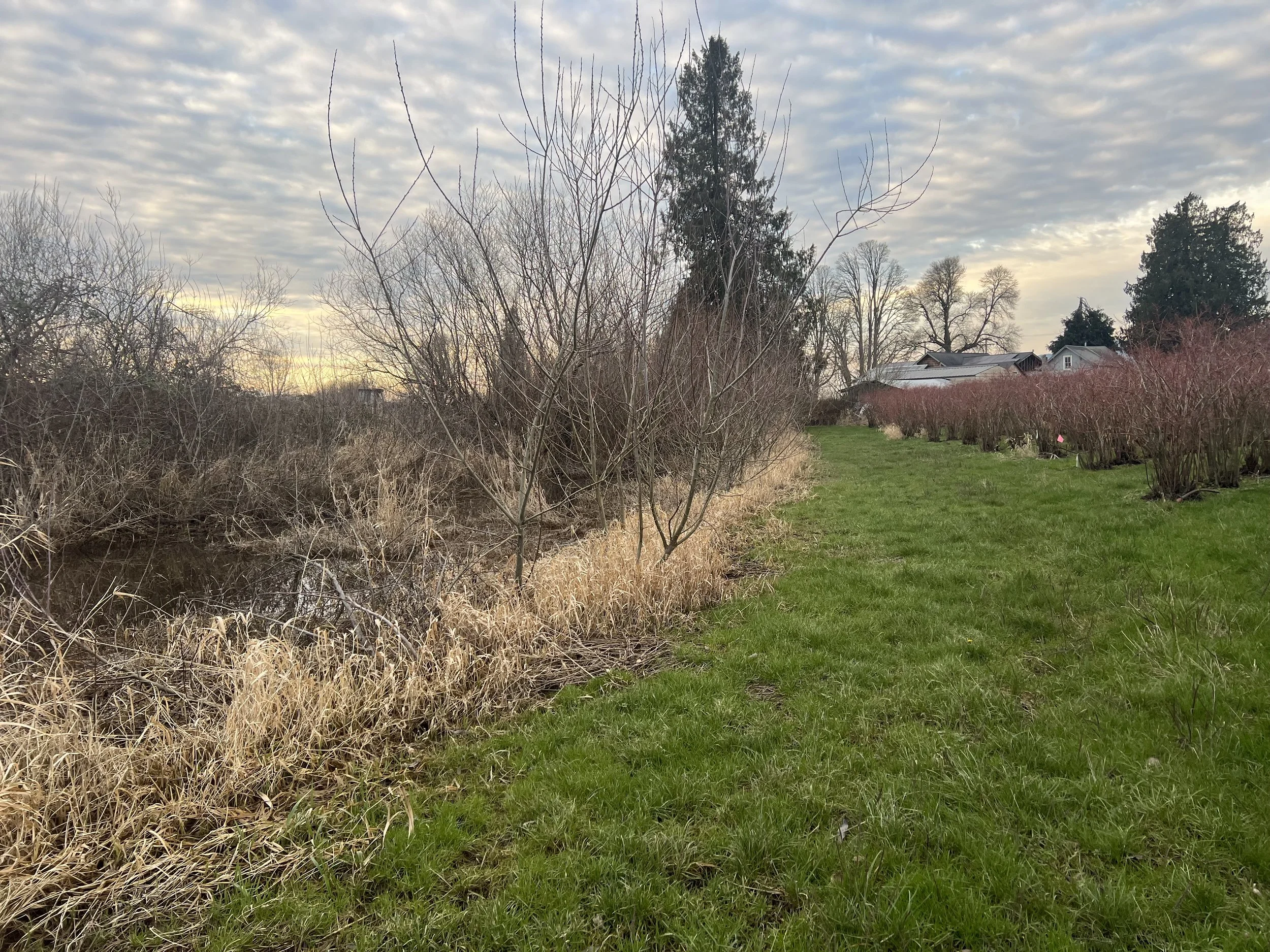
Edison Slough restoration on the Bow Hill Blueberries property (Photo: Bryony Angell)
It’s been a few years since we did the restoration, and you can observe further down the slough beyond our property, where there isn’t mitigation of the canary grass, and it’s continuing to spread.
It’s both the natural areas and the blueberry bushes that attract birds. The property supports bigger birds, too. Great blue herons stalk along the slough and sometimes in the blueberry rows. I see the occasional pheasant, too.
Of the raptors, I see harriers the most. They’re a mid-sized raptor that hunts low over the ground. They’ll be hovering over the bushes, tilting back and forth, not flapping their wings. Then they’ll dive to the ground. They help us with rodent control.
I see birds as part of my delivery runs in the Valley, too. Those clouds of shorebirds, called a murmuration, flying over the Samish flats as I drive a delivery to the Food Hub. Swans in fields all winter. Or a convocation of 20 bald eagles sitting in a big tree, which I saw one December dusk, on the way home near Samish Bay Cheese. The birds are a special part of farm life in Skagit.
Bow Hill Blueberries Spring Farm Store hours are Wednesday through Thursday, 10AM to 4PM; Friday through Sunday, 10AM-6PM.
As told to Bryony Angell. This interview was edited for length and clarity. info@skagitonians.org